高雄活動大集合
Kaohsiung Events
返回首頁
洞穴時間:物質、空間與生命
摘要
蔡宗勳駐村成果展,探討物質與空間的關係,從高雄壽山的石灰岩礦場到建築空間,探索生命在其中的沉積與變化
內容
駁二藝術家進駐計畫 Pier-2 Artist-in-Residence Program
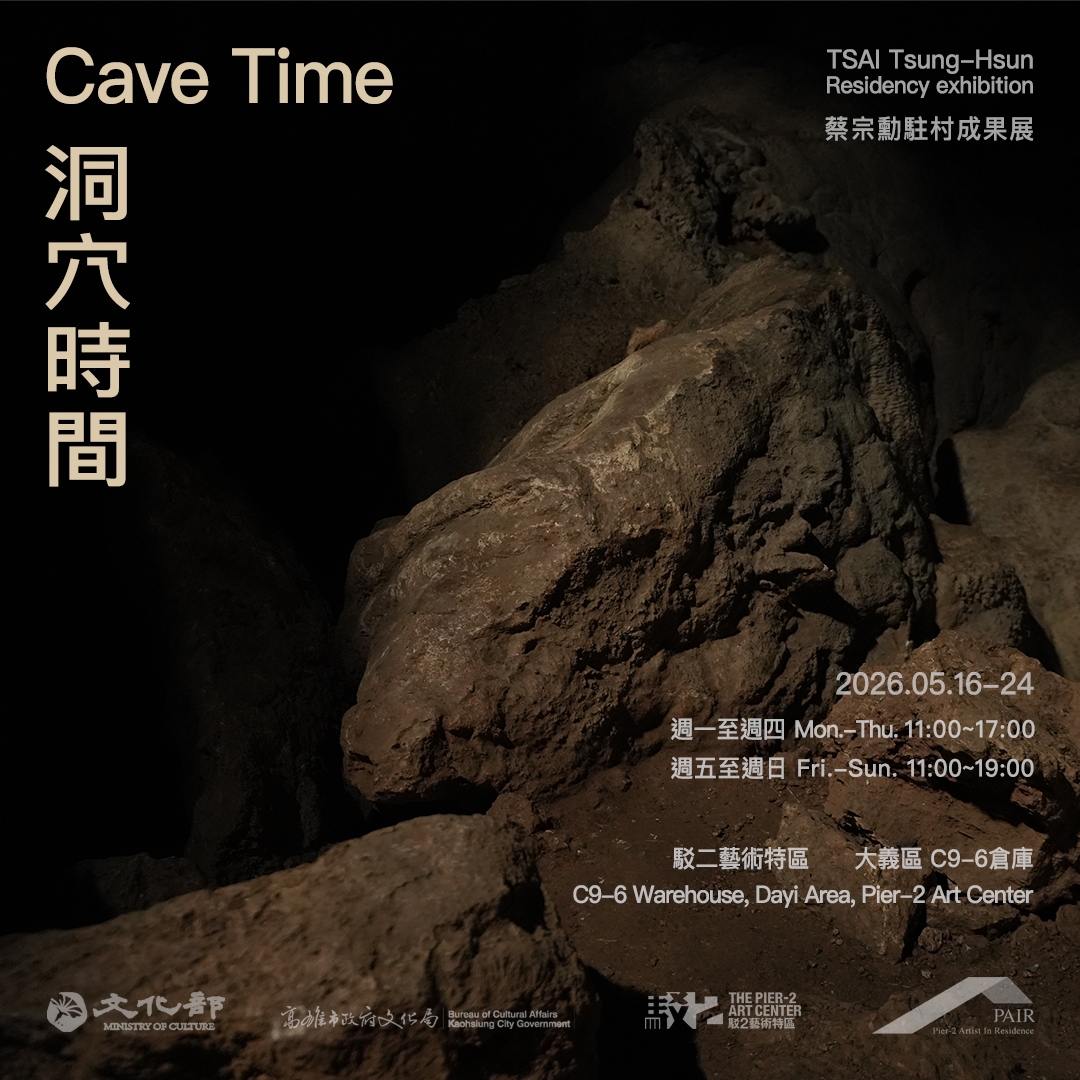
洞穴時間—蔡宗勳駐村成果展
Cave Time-TSAI Tsung-Hsun Residency exhibition
起初我環顧四周,開始思考這些建立起空間的物質從何而來?空間倚靠物質建構,而人走進其中,在裡頭停留、休息與生活,面對這些包裹與乘載我們的空間,是不是也像是走入這些物質當中?
帶著這個想像與思考,我逐步來到高雄壽山,在壽山山腳曾經有一座台灣最早的水泥礦場,透過挖取石灰岩並燒製加工得到水泥—這個建築的基礎原料,壽山即是一座隆起的高位珊瑚礁石灰岩,透過珊瑚、貝殼與鈣質生物的遺骸形成岩體;而當一棟建物被蓋起時,地景就會有一部分消失,這些有著多樣貝殼痕跡的石灰岩與建築空間中的人為痕跡,在消減與增加的時間裡,物質成為多變的形體,在不同的時間中停留與註記,地景與居所,由石灰岩到建築,而我們是不是生活在一片地景之中呢?
我循著向下的路徑,在風化與溶蝕後的石灰岩洞中時間隨著燈光顯現,在洞中被石灰岩環繞及身體被空間所包覆的體感,讓我想起在面對建築空間時的思考,關於物質與空間、關於地下與地上,以及兩種沉積的狀態,在洞穴移動的過程中我好像成為了殼中的人,手腳貼合著壁面移動,頭燈在洞中四處探索,洞穴與居住空間同樣在石灰岩中形成,像是生物以鈣質長出自己的家,而洞穴是殼也是居所,以光透出石灰岩的時間。
At first, I looked around and began to wonder: where do the materials that build up these spaces come from? Space relies on material construction, and as people enter, stay, rest, and live within it, are we not also entering into these very materials as they envelop and carry us?
With these reflections, I gradually made my way to Shoushan in Kaohsiung. At the foot of Shoushan, there was once one of Taiwan's earliest cement quarries. Through the extraction of limestone and the firing process to produce cement—the foundational raw material of architecture—Shoushan reveals itself as an uplifted high-altitude coral reef limestone. The rock mass was formed through the remains of corals, shells, and calcified organisms; yet, when a building is erected, a part of the landscape disappears. Between these limestone rocks bearing diverse shell traces and the human traces within architectural spaces, through the time of depletion and addition, matter becomes a fluid form, lingering and leaving its mark across different eras. From limestone to architecture, from landscape to dwelling—are we not living within a singular, continuous landscape?
I follow a downward path. Inside limestone caves shaped by weathering and erosion, time manifests with the flickering light. The physical sensation of being surrounded by limestone and enveloped by space reminds me of my thoughts on architectural environments: about matter and space, about the subterranean and the surface, and about two states of sedimentation. In the process of moving through the cave, I seem to become a person within a shell, moving with hands and feet pressed against the walls, my headlamp scouting the surroundings. Caves and living spaces are both formed within limestone, much like organisms growing their own homes from calcium. The cave is a shell and also a dwelling, revealing the time of limestone through light.